
If your gums bleed when you brush or your dentist has mentioned that your gums don’t look quite right, you may already be in the early stages of gum disease. The frustrating part? Most people who have it don’t feel a thing. Gum disease is one of the most common chronic health conditions in adults, yet it advances quietly for months or years before causing the kind of pain that sends someone to the dentist. At Monokian Dentistry in Marlton and Haddonfield, NJ, we catch and treat gum disease early so our patients keep their teeth, their bone, and their overall health for the long run.
Here is what gum disease actually is, how to recognize the warning signs, and exactly what your dentist does to stop it.
What Is Gum Disease?
Gum disease, also called periodontal disease, is a bacterial infection of the tissues that surround and support your teeth. It starts when plaque, the sticky film of bacteria that forms on teeth every day, builds up along and beneath the gumline. If plaque isn’t consistently removed through brushing and flossing, it hardens into tartar, which brushing alone can’t remove. The bacteria in plaque and tartar release toxins that inflame the gum tissue. Over time, that inflammation breaks down the connective tissue and bone that hold teeth in place.
There are two main forms: gingivitis and periodontitis. Gingivitis is the earlier, milder form in which the gums are inflamed but the underlying bone and tissue haven’t been damaged yet. Periodontitis is the more advanced disease, where the infection has spread below the gumline and started destroying the bone that anchors the teeth. Left untreated, periodontitis is a leading cause of adult tooth loss.
The connection to overall health goes beyond your mouth. Research links periodontal disease to cardiovascular disease, diabetes complications, respiratory infections, and adverse pregnancy outcomes. Your gums aren’t separate from your body; they’re part of it.
What Are the Warning Signs of Gum Disease?
Most early-stage gum disease is painless, which is exactly why so many people are surprised to hear the diagnosis at a routine cleaning. Our dentists at Monokian Dentistry, including Dr. David Monokian, DDS, and Dr. Michael Monokian, DMD, look for these signs at every exam:
- Bleeding gums. Gums that bleed when you brush or floss are almost never “normal.” Healthy gum tissue does not bleed.
- Red, swollen, or tender gums. Healthy gums are pale pink and firm. Puffiness or a darkened red color signals inflammation.
- Persistent bad breath. The bacteria driving gum disease produce sulfur compounds that cause an odor that brushing alone won’t eliminate.
- Receding gums. When gums pull away from the teeth, the roots become exposed and teeth can appear longer than before.
- Loose or shifting teeth. Bone loss allows teeth to shift position or develop mobility they didn’t have before.
- Pockets between teeth and gums. Your dentist measures the depth of the space between your teeth and gums with a small probe. Healthy pockets are 1 to 3 millimeters deep. Deeper pockets indicate disease.
- Pus between teeth and gums. A sign of active infection that needs prompt treatment.
- Changes in your bite. If your teeth no longer fit together the way they used to, bone loss or tooth shifting may be the reason.
One of these symptoms on its own doesn’t always mean gum disease, but more than one together is a strong signal. If anything on that list sounds familiar, schedule an appointment so we can take a look.
What Causes Gum Disease?
Plaque buildup is the direct cause of gum disease, but several factors make some people more vulnerable than others. Understanding your risk helps us build a prevention plan that fits your health picture.
- Inadequate oral hygiene. Skipping daily flossing and brushing is the most common driver.
- Tobacco use. Smoking and smokeless tobacco are among the strongest risk factors. Tobacco reduces blood flow to the gums and suppresses the immune response, making it harder for gum tissue to heal.
- Diabetes. Uncontrolled blood sugar raises infection risk throughout the body, including in the gums. The relationship runs both ways: advanced gum disease also makes diabetes harder to control.
- Genetics. Some people are predisposed to gum disease regardless of how diligently they brush and floss.
- Medications. Certain blood pressure drugs, antidepressants, and anticonvulsants reduce saliva flow or cause gum overgrowth, both of which create conditions where bacteria thrive.
- Hormonal changes. Pregnancy, menopause, and puberty all alter how gum tissue responds to plaque bacteria.
- Crooked or crowded teeth. Overlapping teeth create hard-to-clean spaces where bacteria accumulate.
- Grinding or clenching (bruxism). The excessive forces applied to teeth and supporting bone can accelerate gum disease progression.
What Are the Stages of Gum Disease?
Gum disease progresses in stages, and the stage determines the treatment. Here is how each one is classified and what it means for your teeth.
| Stage | What’s Happening | Symptoms You May Notice | Reversible? |
|---|---|---|---|
| Gingivitis | Gums are inflamed from plaque buildup. No bone loss yet. | Bleeding when brushing, red or puffy gums, mild bad breath | Yes, with professional cleaning and improved home care |
| Early Periodontitis | Infection spreads below the gumline. Small pockets form. Slight bone loss begins. | Bleeding, 4–5 mm pockets, some gum recession | Manageable but bone loss is permanent |
| Moderate Periodontitis | Significant bone and tissue destruction. Pockets deepen. Teeth may shift slightly. | Visible recession, 5–7 mm pockets, sensitivity, early mobility | Controllable with treatment; damage is not reversible |
| Severe Periodontitis | Extensive bone loss. Teeth become loose. Tooth loss is likely without intervention. | Loose teeth, pockets over 7 mm, significant recession, pain, pus | Treatment can stop progression; some teeth may not be saveable |
The critical takeaway: gingivitis is the only stage that is fully reversible. Every stage beyond it involves some degree of permanent bone loss. This is why early detection matters so much, and why we screen every patient at every visit.
How Do Dentists Diagnose Gum Disease?
Diagnosing gum disease is part of every comprehensive exam at Monokian Dentistry. Our team uses a combination of clinical measurement and imaging to get the full picture.
- Periodontal probing. A thin, calibrated probe gently measures the depth of the pocket between each tooth and the surrounding gum. We record a number at six points around every tooth. Depths greater than 3 millimeters indicate concern; depths of 5 mm or more signal active disease.
- Gum assessment. We note bleeding on probing, gum color, swelling, and recession around each tooth.
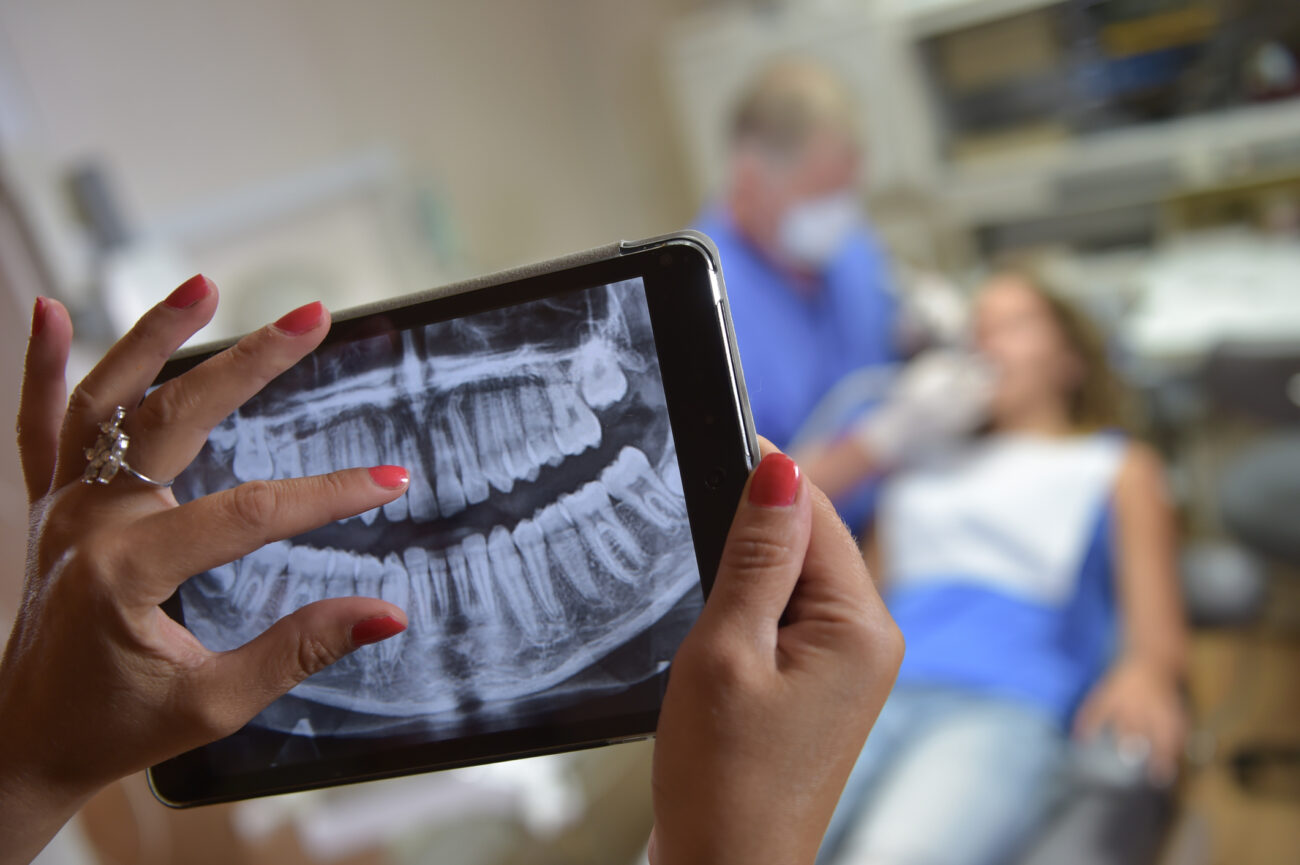
- Dental X-rays. Full-mouth radiographs reveal bone levels and any bone loss between or around the roots of the teeth. We may use cone-beam 3D imaging for more complex cases.
- Medical and medication review. Because systemic conditions and medications affect your gum health, we review your health history at every appointment.
Once we’ve collected this information, we stage and grade your disease according to current guidelines from the American Academy of Periodontology. That staging guides the exact treatment we recommend.
How Is Gum Disease Treated?
Gum disease treatment is tailored to the stage of the disease. Early gingivitis may resolve with a professional cleaning and better home care. More advanced disease requires deeper, more targeted intervention. Here is how treatment typically progresses.
Step 1: Professional Cleaning (Prophylaxis)
For patients with gingivitis and healthy or near-healthy bone levels, a standard cleaning by our dental hygiene team removes the plaque and tartar causing the inflammation. Combined with improved at-home brushing and flossing habits, most patients see their gingivitis resolve within a few weeks.
Step 2: Scaling and Root Planing (Deep Cleaning)
When disease has progressed below the gumline, a deep cleaning—called scaling and root planing—is the standard first-line treatment for periodontitis. This is different from a routine cleaning. Our team uses specialized ultrasonic instruments and hand scalers to remove plaque and tartar from the root surfaces beneath the gums, then smooths the root surface so bacterial toxins have fewer places to adhere and gum tissue can re-attach more effectively.
Scaling and root planing is typically done in quadrants, treating one section of the mouth at a time, and local anesthesia keeps the process comfortable. Most patients are surprised by how tolerable the procedure is. Mild soreness and sensitivity for a few days afterward are normal and usually resolve quickly.
Step 3: Re-Evaluation
Four to eight weeks after completing scaling and root planing, we re-examine your gums to measure how they’ve responded. Pocket depths often improve significantly once the bacterial load is reduced and home care is consistent. At this point, we determine whether additional treatment is needed or whether periodontal maintenance can keep the disease controlled.
Step 4: Periodontal Maintenance
Once stabilized, gum disease patients shift from routine cleanings to periodontal maintenance visits, typically every three to four months rather than every six months. These more frequent visits are not a luxury; they are a clinical necessity. Bacteria that cause gum disease re-colonize in pockets faster than in healthy gum tissue, and more frequent professional cleaning keeps that bacterial load below the threshold that triggers active disease.
Step 5: Advanced Treatment, When Needed
Some patients need additional care beyond scaling and root planing. Our team coordinates with periodontists and oral surgeons for procedures such as osseous surgery to reduce pocket depth, bone grafting to rebuild lost bone, or soft tissue grafting to restore receded gum tissue. We make referrals to trusted specialists when needed and stay involved in your care throughout. Everything we do is coordinated under one roof when possible, so you’re never navigating your care alone.
Can Gum Disease Be Reversed?
This is one of the most common questions we hear, and the honest answer depends entirely on what stage the disease has reached.
Gingivitis can be completely reversed. Because bone and tissue haven’t been damaged yet, removing the bacteria and improving home care allows gum tissue to return to a fully healthy state. It takes a matter of weeks, not months.
Periodontitis cannot be reversed, but it can be controlled. Once bone and connective tissue have been lost, they do not grow back on their own. Treatment stops the infection, prevents further destruction, and stabilizes the disease so your remaining bone and teeth stay intact. For patients who qualify, bone grafting can rebuild lost bone in select areas, particularly in preparation for dental implants. But the goal of periodontal treatment is control, not cure, which is why ongoing maintenance appointments are part of the long-term plan, not optional add-ons.
The good news is that most people with gum disease, even moderate or severe cases, can keep their natural teeth with consistent treatment and care. We’ve seen patients come in with significant disease who are now years into stable, healthy maintenance. The outcome depends almost entirely on how soon you start and how consistent you stay.
How Can You Prevent Gum Disease?
Prevention is straightforward even if it requires daily commitment. The habits that prevent gum disease are the same ones that protect your teeth overall.
- Brush twice daily using a soft-bristled brush and fluoride toothpaste. Hold the brush at a 45-degree angle to the gumline and use gentle circular strokes.
- Floss once a day. Flossing removes plaque from between the teeth and along the gumline where a toothbrush can’t reach. Interdental brushes or a water flosser are effective alternatives if traditional floss is difficult to use.
- See your dentist regularly. Professional cleanings remove tartar that brushing can’t, and early detection catches any signs of disease before they advance. For most patients, that means two visits a year.
- Don’t smoke. Quitting tobacco is the single most impactful lifestyle change you can make for your gum health.
- Manage systemic conditions. Keeping diabetes controlled, discussing medication effects with your physician, and managing stress all reduce your gum disease risk.
The team at Monokian Dentistry, including Dr. Robert Kirke, DMD, Dr. Christopher Monshizadegan, DMD, Dr. Stephen Pou, DDS, Dr. Chad Rebhun, DMD, Dr. Ritesh Salvi, DDS, Dr. Lauren Trager, and Dr. Poonam Yadav, DMD, reviews your home care routine at every visit and provides personalized recommendations based on your specific health picture. We treat our patients like family, and that means telling you what you actually need to hear, not what’s easiest.
If you’re in Marlton, Haddonfield, or anywhere across South Jersey, and your gums have been bothering you—or even if you can’t remember the last time a dentist checked them—now is a good time to schedule. Gum disease is not something that fixes itself. But caught early, it’s also one of the most manageable conditions in dentistry. Schedule a visit with our team, and let’s take a look together. No insurance? No problem. The Monokian Membership Plan gives uninsured patients access to gold standard dental care at our Haddonfield and Marlton offices. Since 1978, we’ve been redefining the dental experience in South Jersey, and we’d love to welcome you home.
Frequently Asked Questions
Is bleeding when I brush always a sign of gum disease?
Not always, but it’s almost never something to ignore. Occasional bleeding from brushing too hard or starting flossing after a long break may not be gum disease. But if your gums bleed consistently when you brush or floss, it’s a reliable sign of inflammation. Healthy gum tissue doesn’t bleed with gentle brushing. We recommend having it evaluated rather than waiting to see if it resolves on its own, because gingivitis is easy to treat when caught early and much harder to manage once it progresses.
Can I have gum disease without knowing it?
Yes, and most people do. Gum disease is largely painless in its early and moderate stages. The infection progresses silently under the gumline for months or years before it causes noticeable symptoms like loose teeth or significant pain. This is one of the core reasons professional dental exams matter even when you feel fine. Our dentists at Monokian Dentistry catch gum disease long before patients feel it, and that early window makes treatment significantly more effective.
How long does treatment take?
Gingivitis often resolves within a few weeks of a professional cleaning and improved home care. Scaling and root planing for periodontitis is usually completed over two to four appointments, treating one section of the mouth at a time. After a re-evaluation period of four to eight weeks, most patients move into a maintenance schedule. For more advanced cases requiring specialist referral, the timeline varies depending on which additional procedures are needed. Our team walks you through a realistic plan from the start so you know exactly what to expect.
Will I need to see a gum specialist (periodontist)?
Most gum disease cases can be managed by our general dentistry team. For moderate-to-severe periodontitis, bone loss that requires grafting, or situations where surgery is the appropriate next step, we coordinate with trusted periodontal specialists and oral surgeons. We stay involved throughout so you always have continuity in your care. We don’t simply hand you a referral and send you off; we make sure the next step fits your overall treatment plan.
Does gum disease affect the rest of my health?
Research consistently links periodontal disease to several systemic conditions, including cardiovascular disease, type 2 diabetes, respiratory disease, and complications in pregnancy. The bacteria responsible for gum disease can enter the bloodstream and trigger inflammatory responses throughout the body. Managing gum disease isn’t only about keeping your teeth; it’s part of managing your overall health. Our dentists take your full medical history seriously and factor it into every treatment recommendation we make.
Is gum disease treatment covered by insurance?
Many dental insurance plans cover scaling and root planing at least partially, as it is classified as a necessary medical procedure rather than a cosmetic one. Coverage varies significantly by plan, and factors like how many quadrants are treated, your plan’s annual maximum, and whether you’ve met your deductible all affect the final out-of-pocket cost. Our team verifies your benefits before treatment begins so there are no surprises. For patients without insurance, the Monokian Membership Plan provides a cost-effective alternative that includes cleanings, exams, and discounts on treatment. No insurance? No problem.
Can children get gum disease?
Children can develop gingivitis, and it’s more common than most parents expect. Hormonal changes during puberty can make gum tissue more sensitive to bacteria, leading to inflammation even with decent brushing habits. True periodontitis with bone loss is rare in children but can occur in those with certain systemic conditions. Establishing good brushing and flossing habits early, along with regular professional cleanings, is the most effective prevention. Our team at Monokian Dentistry sees patients of all ages and makes sure younger family members get the same thorough gum evaluation as adults at every visit. Our team, including Dr. David Monokian, DDS, Dr. Michael Monokian, DMD, Dr. Robert Kirke, DMD, Dr. Christopher Monshizadegan, DMD, Dr. Stephen Pou, DDS, Dr. Chad Rebhun, DMD, Dr. Ritesh Salvi, DDS, Dr. Lauren Trager, and Dr. Poonam Yadav, DMD, is here for every member of your family. Welcome home.